1. Metawatch

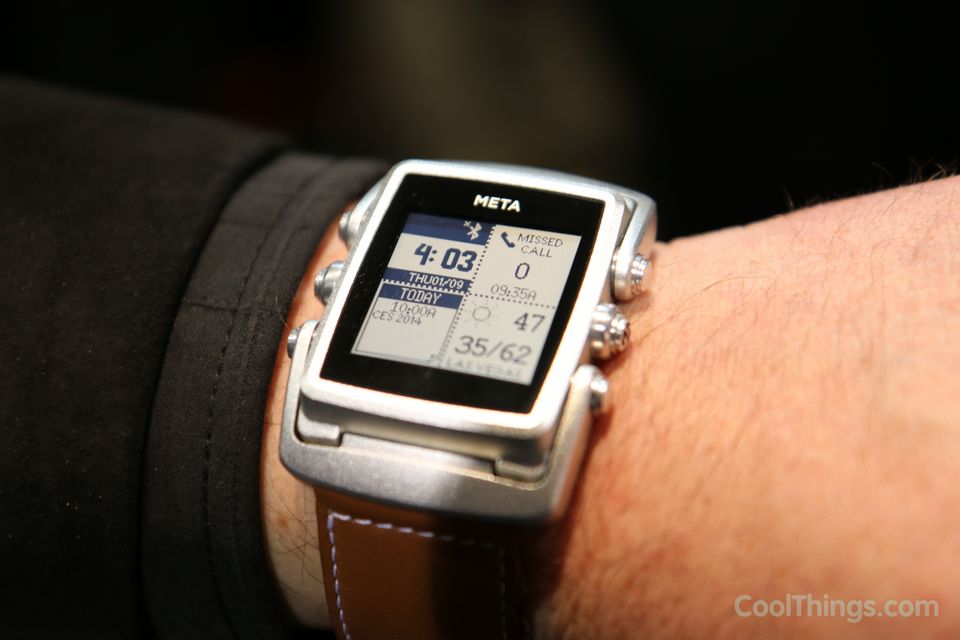
Made by Fossil spinoff, Metawatch, the Meta is fashioned by renowned designer Frank Nuovo, so it gets a little extra style injection compared to the original version of the timepiece. Features are more or less standard with other smartwatches, so you can pair it with your phone to receive regular notifications. Details include a 126 x 126 LCD panel, a Texas Instruments MSP 430 microcontroller, 64Kb of memory, and a battery rated at seven days of use. No word yet on pricing and exact release dates.
2. Garmin Vivofit

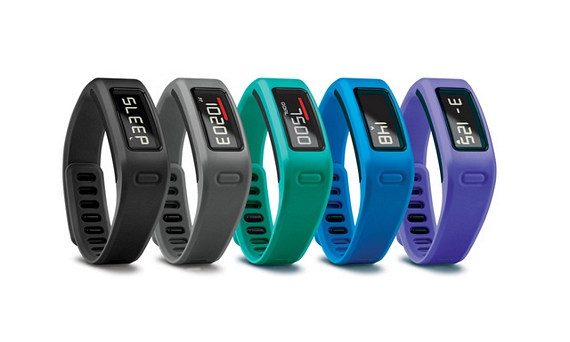
The most annoying part of most existing fitness trackers? Having to charge the darn things on a regular basis when there are more low-maintenance options available. That's exactly what the Garmin Vivofit delivers, shipping with a replaceable battery that can last users up to a year of active use. The rest of the device is pretty standard for all-day fitness monitors, tracking everything from physical activity to sleeping habits. It's also water-resistant and integrates with a cloud-based social component where all your records are automatically logged. It ships in the first quarter, priced at $169.99 for the full version (includes a heart rate monitor).
3. Intel Jarvis

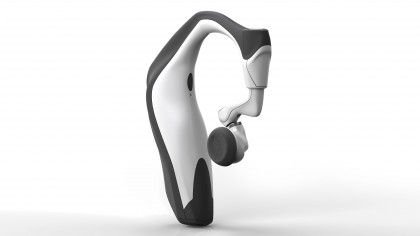
Intel's new wearable takes on a form factor similar to Bluetooth headsets, wrapping around one ear to put a tiny speaker in your listening canals. It works kind of like Google Now or Siri in that you can ask questions and receive answers. Instead of seeing answers on a screen, however, a voice whispers the replies straight to your ear. It's designed to pair with a phone, allowing you to set appointments, cross-check your calendar, set reminders, and perform a whole load of other things by simply shouting out your orders. The geekiest part? You wake the device by piping out, "Hello Jarvis." The Intel Jarvis comes out later in the year.
4. Polar V800

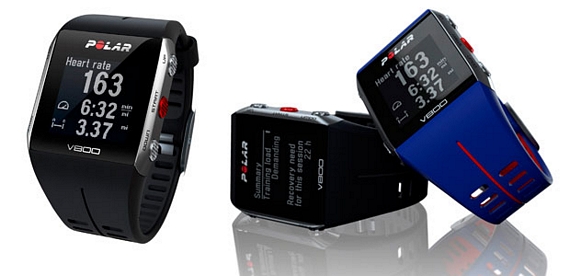
A combo GPS running watch and fitness tracker, it, basically, combines the functions of the Nike Sportswatch GPS with the glut of fitness monitoring contraptions in the market. It comes with multiple profiles for different sports, each one recording your paths, tracking your vitals (including heart rate, at that), and monitoring overall performance. Onboard battery is rated at 14 hours of full-time training use, so it should be good enough to last you an entire day (because, let's be honest, you won't train for 5 hours, much less 14, in a single day). It hits stores in April, priced at $500.
5. Mimo Baby Monitor

Who says only grown people get to partake in the wearable tech world? Babies can now get in on the action too with the Mimo Baby Monitor, a smart baby onesie of sorts. While the idea might sound frivolous, it actually might work, seeing it's essentially a full-time baby monitor replacement. Made by Rest Devices, the tech-riddled onesie bundles sensors for monitoring the child's breathing, body position, skin temperature and activity level, with all of that data accessible straight from an accompanying mobile app. It ships this week, with the Starter Kit (three onesies, one clip-on monitor) retailing for $199.
6. Panasonic A100 Wearable 4K Camera

We're not sure if this is for tactical users, first-person auteurs, or lifecasting diehards. Either way, the Panasonic A100 is a wearable camera that will capture everything in high-detail UltraHD glory. Instead of wearing on a lanyard, however, it mounts on your face (literally, on the cheek right below the ear) using an included plastic mount. It looks positively strange and very conspicuous when worn. Then again, if you're the type to wear a camera on your face for whatever reason, we doubt you're really going to make that a problem.
7. Pebble Steel

The reigning king of smartwatches focuses on style with this new model, which dresses itself in a more refined stainless steel body that should go well with even the most dapper tailored outfits. Everything is retained, from the e-ink display to the 7-day battery life to the generous suite of apps, making for a powerful smart watch fit for the grown-up crowd. It ships January 28th, priced at $249.
8. Kiwi Move

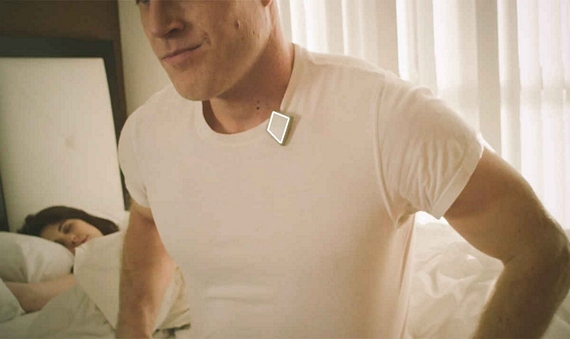
Another in a long line of wearable fitness trackers, the Kiwi Move clips onto your clothing and records data on your physical activity and sleeping habits. To step up the game, however, it comes with a few novel features, such as an onboard mic (so you can voice out commands to your phone), a gesture sensor (it can detect gestures, both preprogrammed and user-defined), and an app that supports using the device to trigger a variety of actions. Possible triggers include voice commands, motion gestures, and various data the tracker's sensors pick up, which you can use to launch apps, perform phone actions, and even activate other connected devices. It's currently available for preorder, priced at $99.
9. Xone

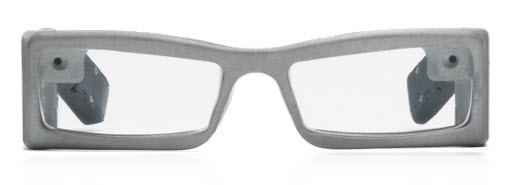
Made by XO Eye Technologies, Xone is a pair of safety glasses aimed for industrial use. It comes with two built-in 5MP cameras (one on each lens) for streaming what you see to remote users, a mic and speaker combo for communicating hands-free, sensors (accelerometers and gyroscope), and a series of LEDs for alerts and notifications. The idea is to for in-field workers to use the glasses while performing their tasks, so they can communicate with personnel in the home office (e.g. managers, specialists), all while giving those same people telepresence capabilities. The glasses will also be used to estimate wear and tear on the workers (using the onboard sensors), tracking their physical activity to gain an estimate of how much physical toil each job takes on them, along with other applications specific to the companies that use them. Obviously, this will be marketed to businesses, so it's not going for cheap. Planned pricing is $400 to $600 a pop, with a $199 a month subscription for the software packages.
10. Basis Band Carbon Steel Edition

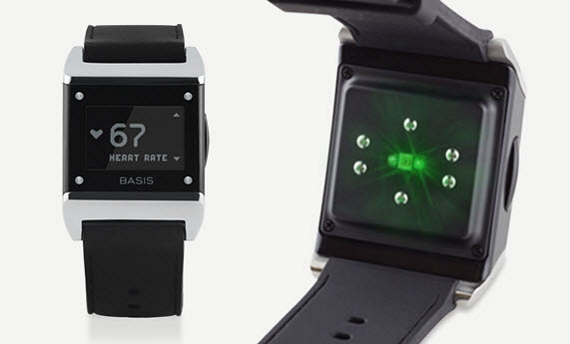
Even last year, the Basis Band has already been among the top fitness trackers in the industry, using some of the best algorithms to map out your exercise habits, physical activities, and sleep cycles. The newest version of the wearable builds even more on top of that, boasting a feature called Advanced Sleep Analysis that uses heart rate, rather than accelerometers as other sleep trackers do, to keep tabs on your nocturnal habits, making for a more accurate measurement. All this, of course, on top of a new watch case clad in steel. Called the Basis Band Carbon Steel Edition, the new iteration retails for $199.
11. Sony Core

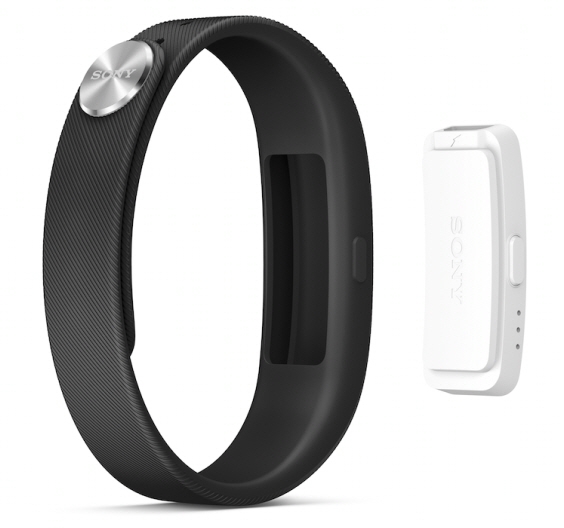
Technically, the Sony Core itself isn't a wearable. Instead, it's a chip bundling processors and sensors that can be installed in a variety of products, instantly giving those products fitness monitoring, "life bookmarking" and smartphone pairing abilities. Details are scant, but Sony will start by putting the Core into a smartband slated for release in the Spring. Price is set at €99.
12. CSR Bluetooth Jewelry

Not a fan of getting smartphone alerts and notifications on your wrist? You may not need to depend strictly on smartwatches for that soon if CSR's tiny wireless circuit boards make their way onto a whole host of new products. For their CES demo, CSR put the chips inside jewelry items and hooked it up to a multi-color LED that provides the visual notifications, with specific alerts customizable via an accompanying app. CSR doesn't intend to release the actual jewelry, but merely used it to demonstrate potential applications for their tech, which they're hoping will find its way into many consumer products down the line.
13. meMini

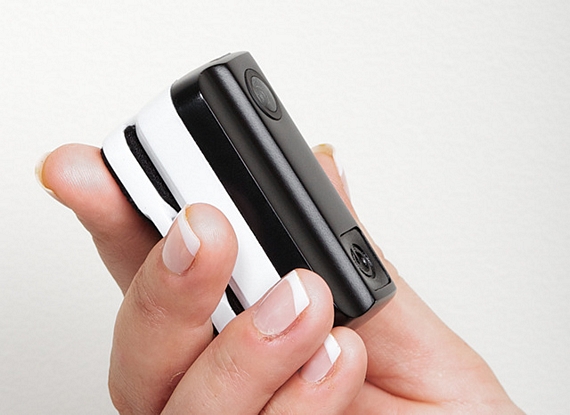
A wearable camera, the meMini will attach to any part of your clothing and continually record everything going on around you. Since a lot of stuff that goes on probably isn't of much interest, it only saves the last five minutes, which you can then choose to store permanently if you wish to keep video of a special moment for posterity. Details include a 3.1 megapixel sensor, 160-degree field of view, and 16GB of onboard storage. The sucky part is battery life -- only 3 hours on a charge, which isn't exactly ideal for an always-on device. They're running the product on a Kickstarter campaign right now where you can reserve one for $150.
14. Vuzix V720

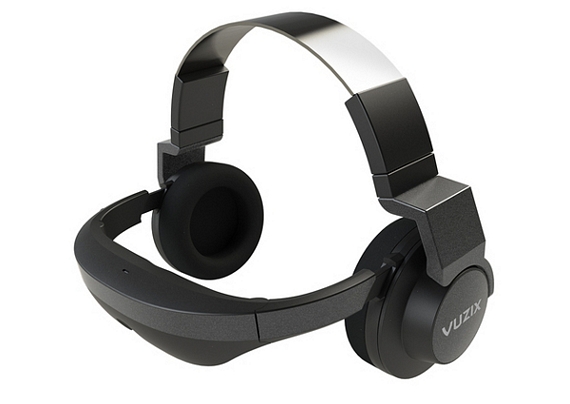
This is a pair of headphones with an integrated flip-down visor that contains an integrated 720p display for viewing movies and other video content in private. It's, essentially, a full-time desktop replacement, so you simply hook it up via HDMI to phones, PCs, tablets and game consoles to enjoy videos in solitary mode. It comes with 3D support, along with, according to Vuzix, an IMAX-like viewing experience.
15. Avegant Glyph

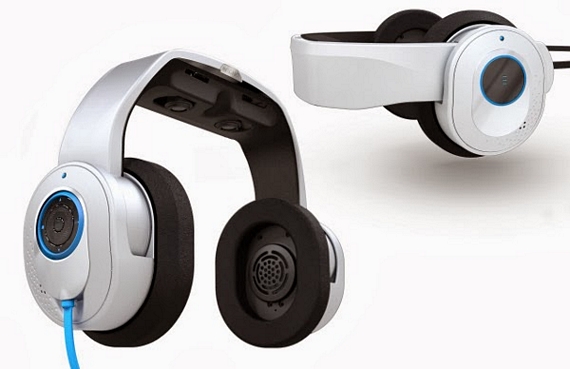
Similar to the Vuzix V720, the Avegant Glyph is a pair of headphones for enjoying video content privately. Instead of a flip-down design, however, the visor is fixed in place, although they replaced the usually plastic headband with a fabric so the resulting form factor is similar. It uses Texas Instruments' DLP technology, projecting a 1280 x 800 resolution display straight to users' retinas, with adjustable dials to manage focus and distance. Other details include titanium speaker drivers, a control panel on the right earpiece, HDMI connectivity, and full access to your peripheral vision even while wearing the visor, so you're not completely closed off to your surroundings. It's launching on Kickstarter this year, priced at $499.
16. Razer Nabu

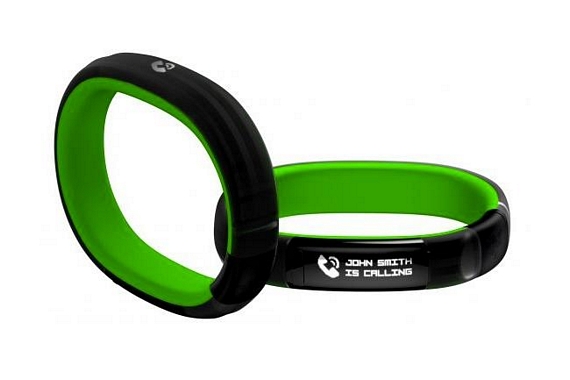
A product that combines a smartwatch and fitness monitor -- that's what most people really want on a wearable today. And that's exactly what the Razer Nabu is trying to deliver. It takes on a simple wristband form factor similar to the Nike Fuelband, then monitors a whole host of activity data. It comes with two LED displays set up along the band: a smaller one for simple indicators and alerts; and a larger one for showing detailed information, like text messages and the like. Battery time is rated at 7 days on a full charge. The Razer Nabu is launching in developer-only edition soon for $49, with the consumer version coming shortly after that for a slightly higher price.
17. Martian Notifier

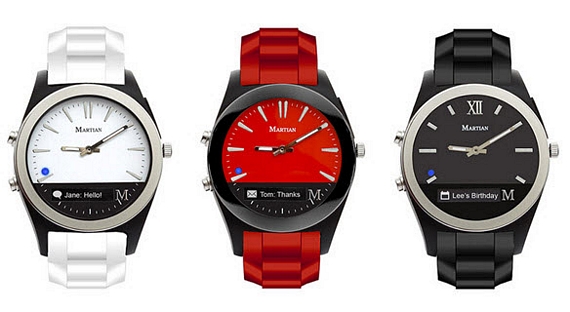
Unlike other smartwatches, the Martian Notifier prioritizes style, so it's a lot less geeky-looking than the lot of digital smartwatches in the market. In fact, the actual dial is analog, although it has a small OLED strip on the lower portion that it uses to display side-scrolling notifications. It supports both Android and iOS phones, pushing all messages that appear in the phone's notification area to the watch's ticker display, so you don't have to configure apps individually. Additionally, it produces haptic vibrations that you can customize for different types of alerts, so you won't even have to check the OLED display to know you just received a new email or got a message on Facebook. It arrives in the Spring, priced at $129.99.
18. Casio STB-1000

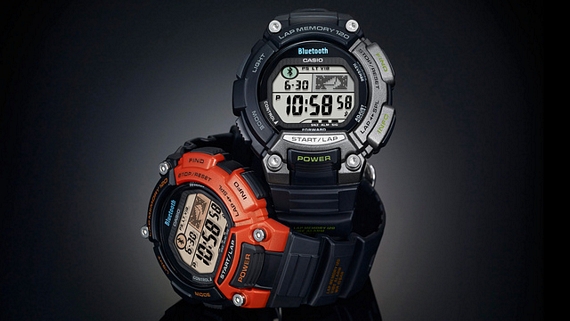
My real wish is for Casio to just make a full-blown G-Shock smartwatch already that rivals the Pebble's functionality. In the meantime, though, I guess we'll have to make do with the Casio STB-1000. Armed with Bluetooth LE, it pairs with iPhones to display various notifications directly on the watch, as well as control music playback from your phone. Since their previous Bluetooth watches already did that, though, the new timepiece comes with support for four iPhone fitness apps, so you can display readings from them directly on the watch. As with other Casio watches, it's durable and waterproof, with the ability to run for two years straight on a single cell battery.
19. Mio Link

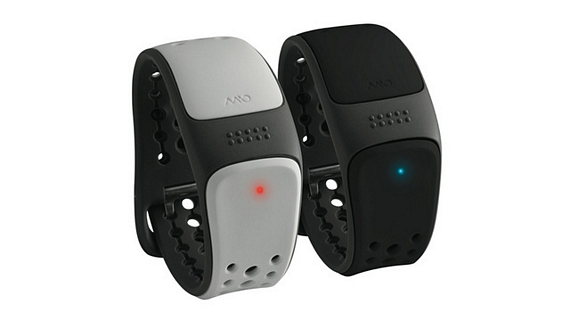
You want a heart rate monitor in a wristband form factor (yay, no chest straps), but don't want to get full-featured activity trackers that can do that? Well, that doesn't sound like a product that exists. Thankfully, somebody recognized the gap and produced the Mio Link, a dedicated heart rate monitor housed in a wristband form. Like many of today's connected wearables, it supports Bluetooth LE for sharing data with your phone, as well as ANT+ for sharing data with bike computers and other fitness gadgets. It's also water-resistant up to 30 meters, so you can measure your heart rate during swims. The Mio Link comes out in March, priced at $100.
20. Epson Pulsense PS-500 and PS-100

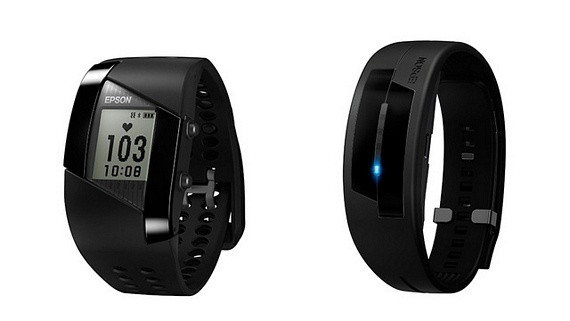
Yep, Epson is getting into the whole consumer wearables business this year. And they're doing it with two products aimed at the fitness tracking crowd: the Pulsense PS-500 Watch and the Pulsense PS-100 Band. Both are fitted with the same abilities to track physical activity, but does most fitness monitors one better by tracking your heart rate sans an additional gadget, too. Since the band doesn't have any display, it comes with LED indicators so you can still use it for monitoring your training in real time. Both are intended to work with Epson's proprietary mobile app, although it's also compatible with many existing fitness software. Both devices are slated for a summer release, priced at $200 for the watch and $130 for the band.
21. June Bracelet

Why does anyone need a sun sensor? Best guess is some people may have reason to be concerned with their amount of sun exposure, but I'm not really sure. Anyway, if that's something you need to do, the June Bracelet is exactly the gadget to make that happen. Designed by Louis Vuitton and Camille Toupet, the device looks more like fine jewelry than some gadget with an obscure specialty function. It pairs with an accompanying iPhone app that records the readings and gives the users corresponding advice.
22. Magellan Echo

Another item in the list, another smartwatch. This one from the longtime GPS maker, however, differentiates itself by being tightly focused on use with various fitness tracking apps. Not only will it stream real-time data from apps like Wahoo Fitness, Strava and MapMyRun, you can control the apps directly using the physical buttons on the watch. You can customize exactly what kind of data it pulls out of the apps, as well as assign custom actions for each specific button. Of course, it can be used to receive notifications and control music playback like other smartwatches, too. The best part? It comes with a standard coin battery, so no regular charging necessary. It's available now, priced at $149.99.
23. LG Lifeband Touch

Similar to the Razer Nabu, the Lifeband Touch attempts to combine the features of a fitness monitor and a smartwatch into one. Clad in a sporty wristband form factor, it houses a three-axis accelerometer and an altimeter, allowing it to monitor a whole host of physical actions (for heart rate, you'll need to pair it with LG's heart monitor headphones). It features a touchscreen OLED display where you can monitor various phone notifications as well as control music playback. It will go on sale in the second quarter, priced at $180.
24. Lumo Lift

Remember the LumoBack from last year's CES? The Lumo Lift is the posture monitor's 2014 iteration. Instead of a belt, however, this one is just a tiny device that clips onto any part of your clothing. We're not sure how this one is able to keep track of good or bad posture, but it supposedly does similar to the original, complete with a vibrating alert when it notices you're slouching. On top of that, it will count steps and measure calories burned, as well as detect whether you're walking, running, sitting, or lying on your back. It's currently running as a crowdfunding project, with pledges to preorder a unit starting at $59.
25. Archos Smartwatch

Archos introduced three smartwatches at CES, each one aimed at a different price segment of the market. The cheap $50 model has a 1.55-inch black and white memory LCD and a battery rated at up to two weeks, while the $100 model steps up to a 1.8-inch color LCD and a battery life of up to 48 hours. The most expensive one costs $130 and gets a 1.8-inch e-ink panel to help you max out the battery life. All three units are unnamed for now, but are slated for a roll out during the summer.
Made by Fossil spinoff, Metawatch, the Meta is fashioned by renowned designer Frank Nuovo, so it gets a little extra style injection compared to the original version of the timepiece. Features are more or less standard with other smartwatches, so you can pair it with your phone to receive regular notifications. Details include a 126 x 126 LCD panel, a Texas Instruments MSP 430 microcontroller, 64Kb of memory, and a battery rated at seven days of use. No word yet on pricing and exact release dates.
2. Garmin Vivofit
The most annoying part of most existing fitness trackers? Having to charge the darn things on a regular basis when there are more low-maintenance options available. That's exactly what the Garmin Vivofit delivers, shipping with a replaceable battery that can last users up to a year of active use. The rest of the device is pretty standard for all-day fitness monitors, tracking everything from physical activity to sleeping habits. It's also water-resistant and integrates with a cloud-based social component where all your records are automatically logged. It ships in the first quarter, priced at $169.99 for the full version (includes a heart rate monitor).
3. Intel Jarvis
Intel's new wearable takes on a form factor similar to Bluetooth headsets, wrapping around one ear to put a tiny speaker in your listening canals. It works kind of like Google Now or Siri in that you can ask questions and receive answers. Instead of seeing answers on a screen, however, a voice whispers the replies straight to your ear. It's designed to pair with a phone, allowing you to set appointments, cross-check your calendar, set reminders, and perform a whole load of other things by simply shouting out your orders. The geekiest part? You wake the device by piping out, "Hello Jarvis." The Intel Jarvis comes out later in the year.
4. Polar V800
A combo GPS running watch and fitness tracker, it, basically, combines the functions of the Nike Sportswatch GPS with the glut of fitness monitoring contraptions in the market. It comes with multiple profiles for different sports, each one recording your paths, tracking your vitals (including heart rate, at that), and monitoring overall performance. Onboard battery is rated at 14 hours of full-time training use, so it should be good enough to last you an entire day (because, let's be honest, you won't train for 5 hours, much less 14, in a single day). It hits stores in April, priced at $500.
5. Mimo Baby Monitor

Who says only grown people get to partake in the wearable tech world? Babies can now get in on the action too with the Mimo Baby Monitor, a smart baby onesie of sorts. While the idea might sound frivolous, it actually might work, seeing it's essentially a full-time baby monitor replacement. Made by Rest Devices, the tech-riddled onesie bundles sensors for monitoring the child's breathing, body position, skin temperature and activity level, with all of that data accessible straight from an accompanying mobile app. It ships this week, with the Starter Kit (three onesies, one clip-on monitor) retailing for $199.
6. Panasonic A100 Wearable 4K Camera

We're not sure if this is for tactical users, first-person auteurs, or lifecasting diehards. Either way, the Panasonic A100 is a wearable camera that will capture everything in high-detail UltraHD glory. Instead of wearing on a lanyard, however, it mounts on your face (literally, on the cheek right below the ear) using an included plastic mount. It looks positively strange and very conspicuous when worn. Then again, if you're the type to wear a camera on your face for whatever reason, we doubt you're really going to make that a problem.
7. Pebble Steel

The reigning king of smartwatches focuses on style with this new model, which dresses itself in a more refined stainless steel body that should go well with even the most dapper tailored outfits. Everything is retained, from the e-ink display to the 7-day battery life to the generous suite of apps, making for a powerful smart watch fit for the grown-up crowd. It ships January 28th, priced at $249.
8. Kiwi Move
Another in a long line of wearable fitness trackers, the Kiwi Move clips onto your clothing and records data on your physical activity and sleeping habits. To step up the game, however, it comes with a few novel features, such as an onboard mic (so you can voice out commands to your phone), a gesture sensor (it can detect gestures, both preprogrammed and user-defined), and an app that supports using the device to trigger a variety of actions. Possible triggers include voice commands, motion gestures, and various data the tracker's sensors pick up, which you can use to launch apps, perform phone actions, and even activate other connected devices. It's currently available for preorder, priced at $99.
9. Xone
Made by XO Eye Technologies, Xone is a pair of safety glasses aimed for industrial use. It comes with two built-in 5MP cameras (one on each lens) for streaming what you see to remote users, a mic and speaker combo for communicating hands-free, sensors (accelerometers and gyroscope), and a series of LEDs for alerts and notifications. The idea is to for in-field workers to use the glasses while performing their tasks, so they can communicate with personnel in the home office (e.g. managers, specialists), all while giving those same people telepresence capabilities. The glasses will also be used to estimate wear and tear on the workers (using the onboard sensors), tracking their physical activity to gain an estimate of how much physical toil each job takes on them, along with other applications specific to the companies that use them. Obviously, this will be marketed to businesses, so it's not going for cheap. Planned pricing is $400 to $600 a pop, with a $199 a month subscription for the software packages.
10. Basis Band Carbon Steel Edition
Even last year, the Basis Band has already been among the top fitness trackers in the industry, using some of the best algorithms to map out your exercise habits, physical activities, and sleep cycles. The newest version of the wearable builds even more on top of that, boasting a feature called Advanced Sleep Analysis that uses heart rate, rather than accelerometers as other sleep trackers do, to keep tabs on your nocturnal habits, making for a more accurate measurement. All this, of course, on top of a new watch case clad in steel. Called the Basis Band Carbon Steel Edition, the new iteration retails for $199.
11. Sony Core
Technically, the Sony Core itself isn't a wearable. Instead, it's a chip bundling processors and sensors that can be installed in a variety of products, instantly giving those products fitness monitoring, "life bookmarking" and smartphone pairing abilities. Details are scant, but Sony will start by putting the Core into a smartband slated for release in the Spring. Price is set at €99.
12. CSR Bluetooth Jewelry

Not a fan of getting smartphone alerts and notifications on your wrist? You may not need to depend strictly on smartwatches for that soon if CSR's tiny wireless circuit boards make their way onto a whole host of new products. For their CES demo, CSR put the chips inside jewelry items and hooked it up to a multi-color LED that provides the visual notifications, with specific alerts customizable via an accompanying app. CSR doesn't intend to release the actual jewelry, but merely used it to demonstrate potential applications for their tech, which they're hoping will find its way into many consumer products down the line.
13. meMini
A wearable camera, the meMini will attach to any part of your clothing and continually record everything going on around you. Since a lot of stuff that goes on probably isn't of much interest, it only saves the last five minutes, which you can then choose to store permanently if you wish to keep video of a special moment for posterity. Details include a 3.1 megapixel sensor, 160-degree field of view, and 16GB of onboard storage. The sucky part is battery life -- only 3 hours on a charge, which isn't exactly ideal for an always-on device. They're running the product on a Kickstarter campaign right now where you can reserve one for $150.
14. Vuzix V720
This is a pair of headphones with an integrated flip-down visor that contains an integrated 720p display for viewing movies and other video content in private. It's, essentially, a full-time desktop replacement, so you simply hook it up via HDMI to phones, PCs, tablets and game consoles to enjoy videos in solitary mode. It comes with 3D support, along with, according to Vuzix, an IMAX-like viewing experience.
15. Avegant Glyph
Similar to the Vuzix V720, the Avegant Glyph is a pair of headphones for enjoying video content privately. Instead of a flip-down design, however, the visor is fixed in place, although they replaced the usually plastic headband with a fabric so the resulting form factor is similar. It uses Texas Instruments' DLP technology, projecting a 1280 x 800 resolution display straight to users' retinas, with adjustable dials to manage focus and distance. Other details include titanium speaker drivers, a control panel on the right earpiece, HDMI connectivity, and full access to your peripheral vision even while wearing the visor, so you're not completely closed off to your surroundings. It's launching on Kickstarter this year, priced at $499.
16. Razer Nabu
A product that combines a smartwatch and fitness monitor -- that's what most people really want on a wearable today. And that's exactly what the Razer Nabu is trying to deliver. It takes on a simple wristband form factor similar to the Nike Fuelband, then monitors a whole host of activity data. It comes with two LED displays set up along the band: a smaller one for simple indicators and alerts; and a larger one for showing detailed information, like text messages and the like. Battery time is rated at 7 days on a full charge. The Razer Nabu is launching in developer-only edition soon for $49, with the consumer version coming shortly after that for a slightly higher price.
17. Martian Notifier
Unlike other smartwatches, the Martian Notifier prioritizes style, so it's a lot less geeky-looking than the lot of digital smartwatches in the market. In fact, the actual dial is analog, although it has a small OLED strip on the lower portion that it uses to display side-scrolling notifications. It supports both Android and iOS phones, pushing all messages that appear in the phone's notification area to the watch's ticker display, so you don't have to configure apps individually. Additionally, it produces haptic vibrations that you can customize for different types of alerts, so you won't even have to check the OLED display to know you just received a new email or got a message on Facebook. It arrives in the Spring, priced at $129.99.
18. Casio STB-1000
My real wish is for Casio to just make a full-blown G-Shock smartwatch already that rivals the Pebble's functionality. In the meantime, though, I guess we'll have to make do with the Casio STB-1000. Armed with Bluetooth LE, it pairs with iPhones to display various notifications directly on the watch, as well as control music playback from your phone. Since their previous Bluetooth watches already did that, though, the new timepiece comes with support for four iPhone fitness apps, so you can display readings from them directly on the watch. As with other Casio watches, it's durable and waterproof, with the ability to run for two years straight on a single cell battery.
19. Mio Link
You want a heart rate monitor in a wristband form factor (yay, no chest straps), but don't want to get full-featured activity trackers that can do that? Well, that doesn't sound like a product that exists. Thankfully, somebody recognized the gap and produced the Mio Link, a dedicated heart rate monitor housed in a wristband form. Like many of today's connected wearables, it supports Bluetooth LE for sharing data with your phone, as well as ANT+ for sharing data with bike computers and other fitness gadgets. It's also water-resistant up to 30 meters, so you can measure your heart rate during swims. The Mio Link comes out in March, priced at $100.
20. Epson Pulsense PS-500 and PS-100
Yep, Epson is getting into the whole consumer wearables business this year. And they're doing it with two products aimed at the fitness tracking crowd: the Pulsense PS-500 Watch and the Pulsense PS-100 Band. Both are fitted with the same abilities to track physical activity, but does most fitness monitors one better by tracking your heart rate sans an additional gadget, too. Since the band doesn't have any display, it comes with LED indicators so you can still use it for monitoring your training in real time. Both are intended to work with Epson's proprietary mobile app, although it's also compatible with many existing fitness software. Both devices are slated for a summer release, priced at $200 for the watch and $130 for the band.
21. June Bracelet

Why does anyone need a sun sensor? Best guess is some people may have reason to be concerned with their amount of sun exposure, but I'm not really sure. Anyway, if that's something you need to do, the June Bracelet is exactly the gadget to make that happen. Designed by Louis Vuitton and Camille Toupet, the device looks more like fine jewelry than some gadget with an obscure specialty function. It pairs with an accompanying iPhone app that records the readings and gives the users corresponding advice.
22. Magellan Echo
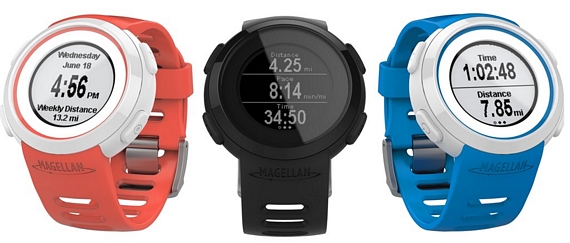
Another item in the list, another smartwatch. This one from the longtime GPS maker, however, differentiates itself by being tightly focused on use with various fitness tracking apps. Not only will it stream real-time data from apps like Wahoo Fitness, Strava and MapMyRun, you can control the apps directly using the physical buttons on the watch. You can customize exactly what kind of data it pulls out of the apps, as well as assign custom actions for each specific button. Of course, it can be used to receive notifications and control music playback like other smartwatches, too. The best part? It comes with a standard coin battery, so no regular charging necessary. It's available now, priced at $149.99.
23. LG Lifeband Touch
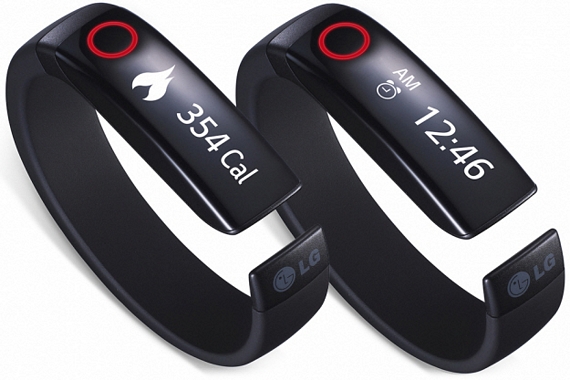
Similar to the Razer Nabu, the Lifeband Touch attempts to combine the features of a fitness monitor and a smartwatch into one. Clad in a sporty wristband form factor, it houses a three-axis accelerometer and an altimeter, allowing it to monitor a whole host of physical actions (for heart rate, you'll need to pair it with LG's heart monitor headphones). It features a touchscreen OLED display where you can monitor various phone notifications as well as control music playback. It will go on sale in the second quarter, priced at $180.
24. Lumo Lift
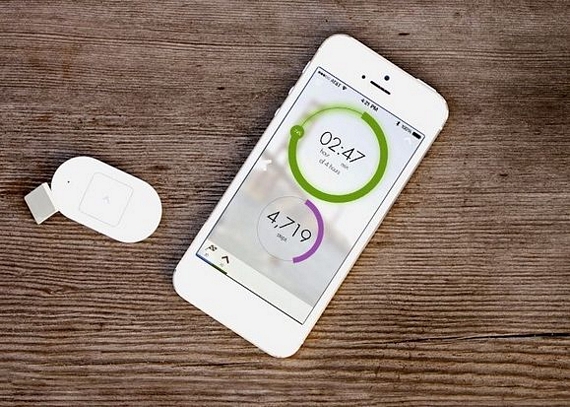
Remember the LumoBack from last year's CES? The Lumo Lift is the posture monitor's 2014 iteration. Instead of a belt, however, this one is just a tiny device that clips onto any part of your clothing. We're not sure how this one is able to keep track of good or bad posture, but it supposedly does similar to the original, complete with a vibrating alert when it notices you're slouching. On top of that, it will count steps and measure calories burned, as well as detect whether you're walking, running, sitting, or lying on your back. It's currently running as a crowdfunding project, with pledges to preorder a unit starting at $59.
25. Archos Smartwatch
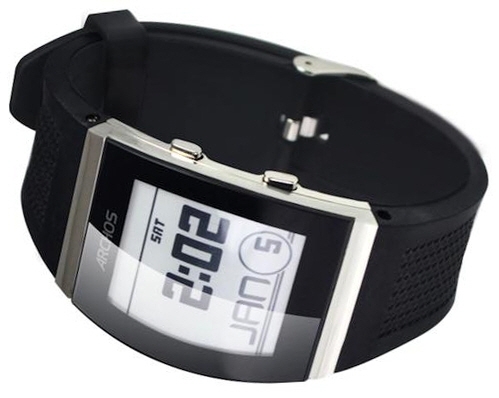
Archos introduced three smartwatches at CES, each one aimed at a different price segment of the market. The cheap $50 model has a 1.55-inch black and white memory LCD and a battery rated at up to two weeks, while the $100 model steps up to a 1.8-inch color LCD and a battery life of up to 48 hours. The most expensive one costs $130 and gets a 1.8-inch e-ink panel to help you max out the battery life. All three units are unnamed for now, but are slated for a roll out during the summer.